Guernsey in this period
Guernsey moves within Tudor political and commercial networks while island families build careers in England and retain seigneurial interests at home.
The sixteenth century reached Guernsey with gunpowder. Castle Cornet was rebuilt for artillery, England broke with Rome, the old ties to the Norman abbeys were cut, and the island found itself a fortress facing France. In such an age land changes hands by indenture and is kept by connection.
In 1509 Lord Broke sold not a field but a lordship, and the man who bought it was a gentleman usher at the court of Henry VIII. At every court the door opens most readily for the man who stands beside it. Thirty-six years later the King confirmed the family's grant, which shows that ushering has its rewards.
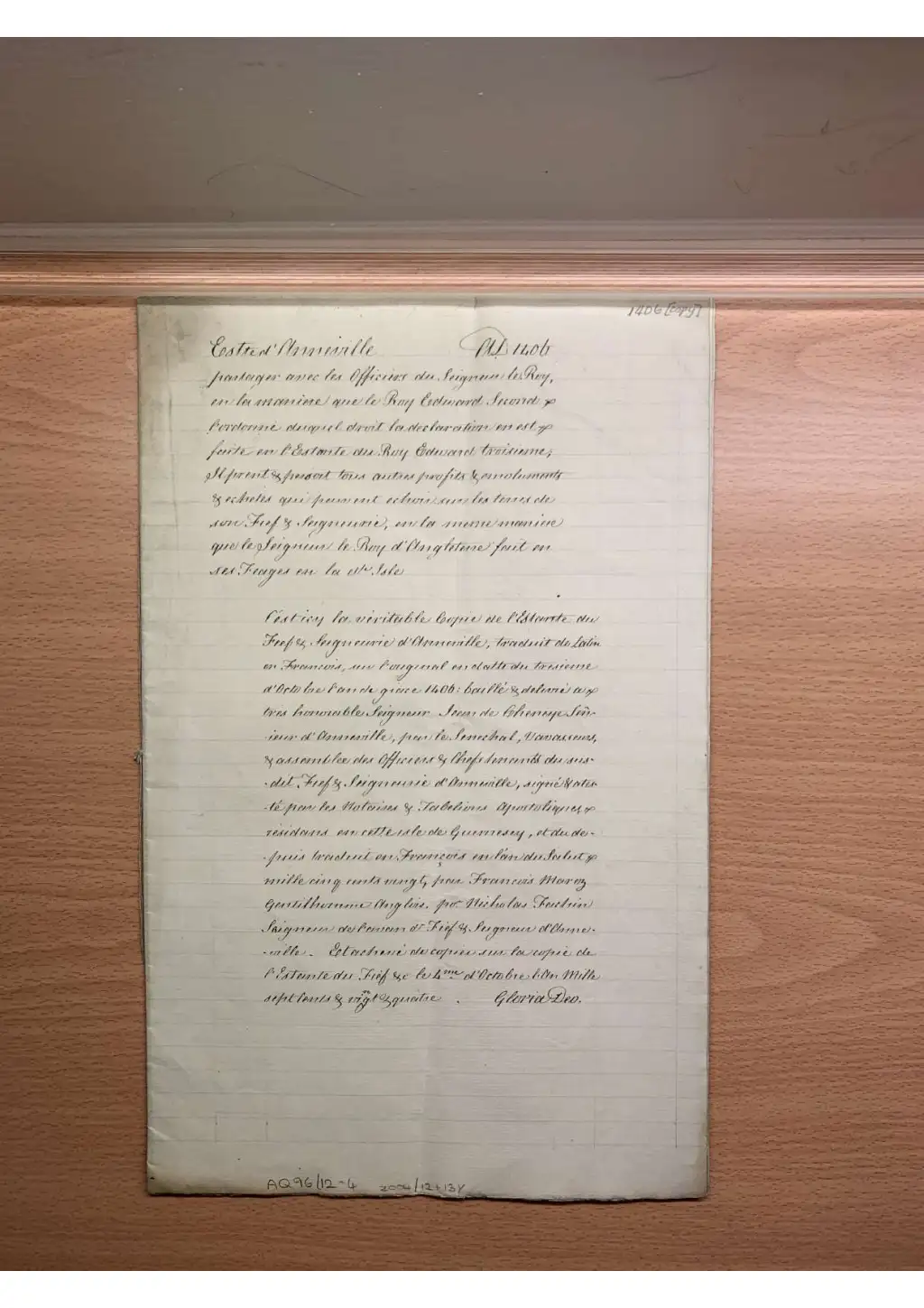
Then, in 1597, royal commissioners came to examine the fief, and the Fouaschin, who then held it, laid before them a document on the origin of Anneville. Think of their position. The grant was almost three and a half centuries old. Charters had been lost, wars had passed, and the fief had passed from family to family. So the document told the story as best it could, and some of it was probably arranged. A historian later called it fictitious. But behind every legend there is a grain of truth, and this one was visible to everyone: Anneville was the largest domain in the island. The commissioners needed no charter to see it. They wrote down what was already a fact.
About these lines: a narrative reconstruction written in the manner of C. Northcote Parkinson (1909–1993), Seigneur of the Fief d'Anneville from 1964 to 1987, historian, and author of the novels of Richard Delancey, a Guernsey sailor. Parkinson did not write them and they are not a historical source. They invent no characters and no speeches: every fact comes from the room above, and words in quotation marks are quoted from the documents cited there.
 Arms associated with Anneville: ermine, a fess gules
On 16 February 1509/10 Robert Willoughby, Lord Broke, sold the de Cheney inheritance to Nicholas Fouaschin. It was not one fief but a lordship: the indenture names together the Manor of Anneville, Le Comte, Carteret and Beuval (AQ 0096/01-01). The double year is the clerks' way of serving two calendars at once: 1509 in the old style, 1510 in the new. A fine of 1542 and an agreement with the Grevilles in 1544-45 completed the transfer.
The buyer knew where power lay. Nicholas Fouaschin served as a gentleman usher at the court of Henry VIII, and on 30 June 1546 the King confirmed the grant of 1248 in the family's favour (AQ 0110/06-01). The Fouaschin, later spelled Fashion, held the whole lordship through the century. In 1573 Thomas Fouaschin is entered field by field in a Livre de Perchage of the Fief le Roi; by 1582 he answers as Seigneur of Le Comte; and the Andros papers keep a Livre de Perchage of the Villain Fief d'Anneville made in 1594.
Then the Crown asked every fief to account for itself. On 15 July 1597 royal commissioners examined the Fief d'Anneville (AQ 0096/12-05, 12-07). A document on the origin of Anneville was laid before them. It came from the Fouaschin, who then held the fief, and it explained the state of things as they knew it. Nearly 350 years after the grant of 1248, no family could still hold every original charter, so some parts of such an account were probably arranged. In 1961 A. H. Ewen called it "a fictitious history of the origin of the Anneville fief". Behind every legend, however, there is a grain of truth. Here the truth was in plain view: the domain of Anneville was very large. The commissioners recorded what was already a state of fact.
AQ 0096/01-01 (indenture of 16 February 1509/10); AQ 0110/06-01 (confirmation of 30 June 1546); AQ 0096/12-05 and 12-07 (examination of 15 July 1597); Andros MSS, Priaulx Library; A. H. Ewen, The Fiefs of the Island of Guernsey (1961).The buyers and sellers of the Tudor century were English lords, but the land they traded stayed under Norman law. In Guernsey the fiefs were sold, inherited and shared according to the custom of Normandy, set down for the island in the Approbation des Lois of 1583 and in the commentary of the Norman jurist Guillaume Terrien. The indenture of 1509/10 is English; the fief it sells is Norman.
Guernsey moves within Tudor political and commercial networks while island families build careers in England and retain seigneurial interests at home.
The Willoughby and Fouaschin story connects Guernsey to the Tudor court, Southampton commerce and royal confirmation. It shows the island not as isolated, but as an active participant in English and Channel networks.
Between 1509 and 1630, the Manor of Anneville passed through documented sales and inheritances between English and local noble families.
In 1509/10 (the year then began on 25 March, so dates in January to March carry both years), Robert Willoughby sold the manor to Nicholas Fouaschin. In 1535, Nicolas handed the seigneurie — the lordship of the estate — to his son Thomas. In 1546, King Henry VIII confirmed Thomas's rights, recalling earlier grants made by Henry III to William De Chesney. In 1542, Sir Anthony Willoughby extinguished competing claims to the estate. In 1610, George Fachin paid homage — the formal promise of loyalty a vassal makes to his lord — to the Governor of Guernsey. In 1630, Fief le Comte was sold (a fief being a piece of land with the rights attached to it, held from a superior lord in exchange for loyalty and services). In that sale, the seller reserved the domaine direct of Anneville: he kept for himself the superior lordship over the land — the Seigneur's own topmost right — and handed the buyer only the right to hold and use the fief.
The legal formulas used in these documents are common English ones.
In 1509/10, Robert Willoughby sold the Manor of Anneville to Nicholas Fouaschin. This sale is the earliest event in the story that we know for certain happened, because it is the first one recorded in surviving documents. The legal wording used in the sale documents is common English wording, not wording specific to Guernsey.
In 1535, Nicolas Fouaschin handed the seigneurie — the lordship of the manor and its fiefs — to his son Thomas. A seigneurie is the lordship held by a Seigneur, the lord of a fief. The handover was done in a deed drawn up before a notary in Southampton, in England. This transfer shows that the estate stayed in the same family and was managed from father to son.
In 1546, King Henry VIII confirmed the rights of Thomas Fashin to the manor. In his confirmation, the King recalled the earlier grants that King Henry III had made to William De Chesney — in other words, he linked Thomas's title back to these old royal grants. The confirmation was written as Letters Patent and was drafted in both French and English. This royal confirmation established that Thomas's title to the manor was legitimate.
In 1610, George Fachin paid homage to the Governor of Guernsey. Homage is the formal promise of loyalty that a vassal makes to his lord. By this act, George Fachin held the manor 'in capite' — that is, directly from the Crown, the King, rather than from any intermediate lord. The act also excluded the dependencies of the abbey. This consolidated the feudal position of the family and their direct submission to the Crown.
In 1630, Fief le Comte was sold. In this sale, the seller reserved the domaine direct of Anneville: he kept for himself the superior lordship over the land — the Seigneur's own topmost right — instead of transferring it to the buyer. What was conveyed to the buyer was the tenancy of the fief — the right to hold and use the land — not the sovereign seigneurie itself, the topmost lordship over it. This sale closes the documented story of the manor for this period.
On 16 February 1509/10 (the year then began on 25 March, so this date carries both years), Robert Willoughby, Lord Brooke, sold the Manor of Anneville, together with its three fiefs, to Nicholas Fouaschin. A fief is a piece of land together with the rights attached to it, such as dues paid by tenants, a court, mills and hunting rights; it was held from a superior lord in exchange for loyalty and services. In Guernsey a fief could be inherited, given, sold and bought like property, but its obligations passed with it. The deed also mentions Courts Leet, Hundreds and free Chapels; these are standard English legal phrases, and they do not prove that such rights actually existed in Guernsey.
On 31 October 1535, Nicolas Fashin (also written Fouaschin), son of Thomas, handed over the Manor and Lordship of Anneville and the fiefs le Comte, Carteret and Beuval to Thomas Fashin, his son. The transfer was made before a notary in Southampton.
On 30 June 1546, King Henry VIII confirmed to Thomas Fashin the Letters Patent that King Henry III had once granted to William De Chesney for the Fief d'Anneville. Copies of the confirmation survive in French and in English.
On 6 August 1610, George Fachin, Seigneur of Anneville, paid homage to Lord George Carew, the Governor of Guernsey. Homage is the formal promise of loyalty made by a vassal to his lord. By paying homage, Fachin established his holding in capite tenure, and he excluded any dependence on abbey lands.
On 1 July 1630, when Fief le Comte was sold, the deed expressly reserved what it calls the 'domaine direct' of Anneville. To reserve means that the seller kept certain things or rights for himself instead of transferring them. Le Comte was a fief that depended on Anneville, a higher fief: its holder owed homage and dues to the Seigneur of Anneville. The deed's own words are that the tenancy was conveyed, not the 'sovereign seigneurie'; in other words, the sale passed on the holding of le Comte itself, while Anneville's position as the fief from which le Comte was held stayed with the seller.
Robert Willoughby, first Baron Willoughby de Broke, fought for Henry Tudor at Bosworth and became a leading servant of Henry VII. The fief was sold by his heir in 1509 to Nicholas Fouaschin, a gentleman usher at Henry VIII’s court; Thomas Fouaschin later obtained a royal confirmation under Henry VIII. Anneville therefore passes through two distinct Tudor connections, not one.
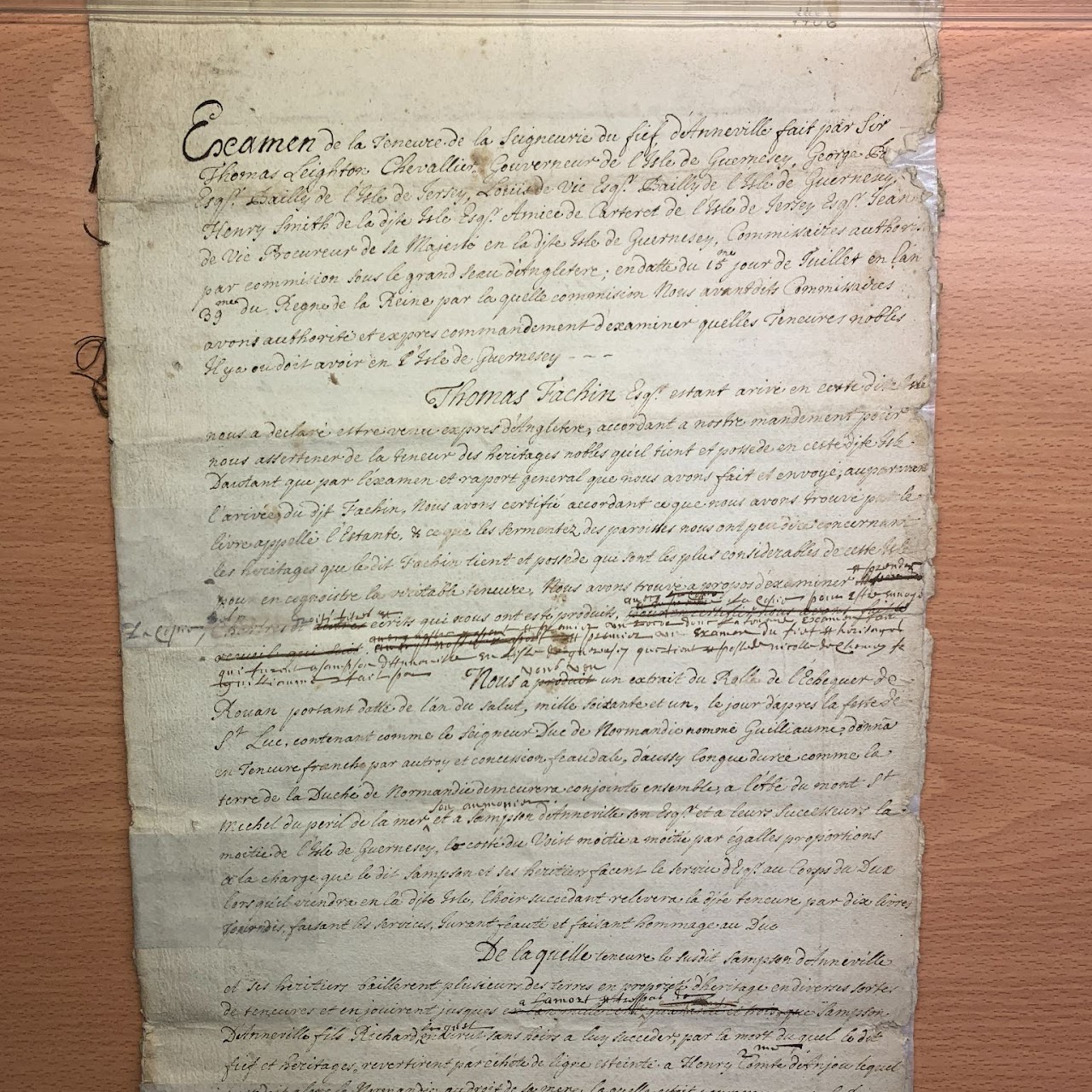
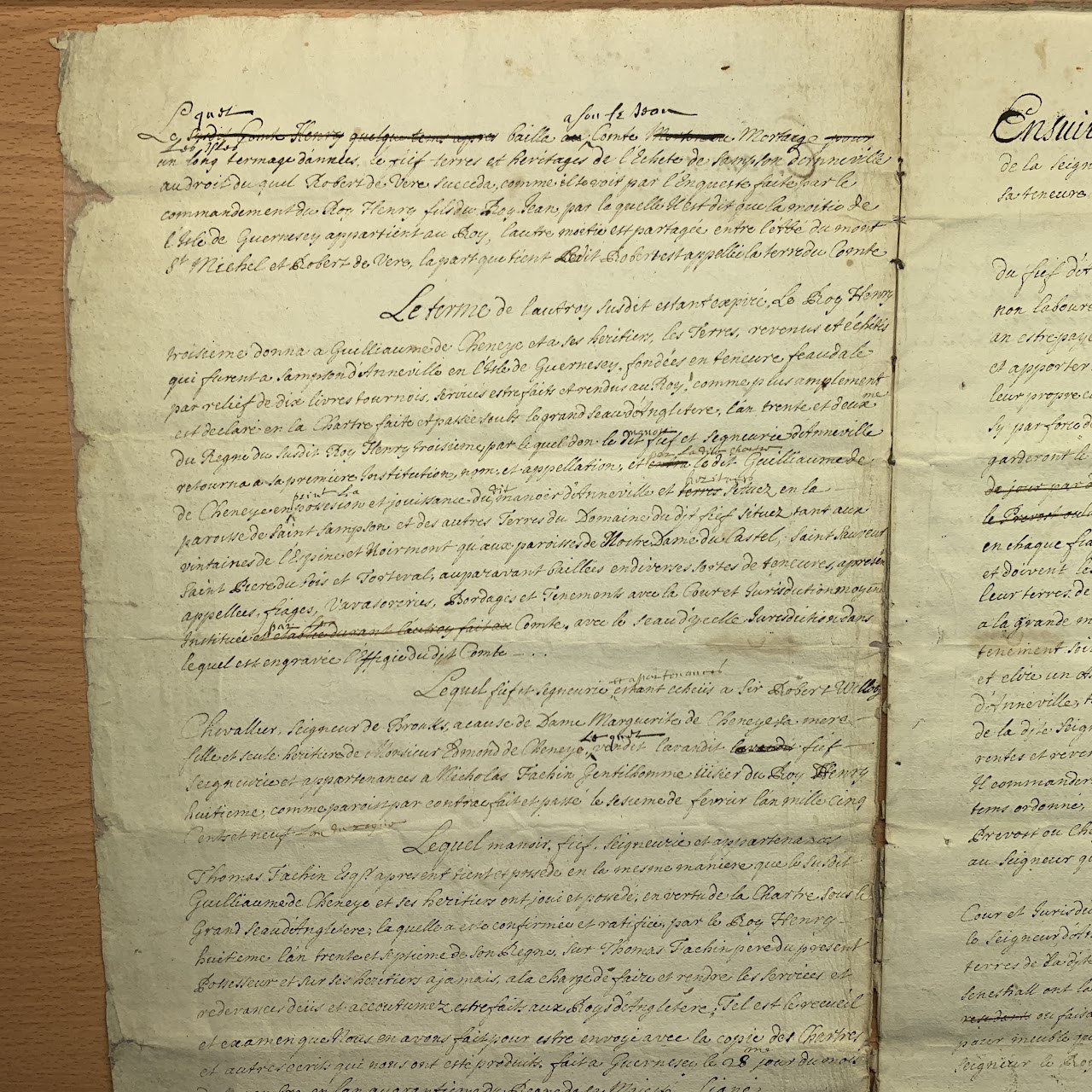 Examination of the tenure of the Fief d’Anneville by royal commissioners, page 1. The page cites grants of King Henry and the years 1509 and 1603.Image · lordofanneville.com · Feudal grants
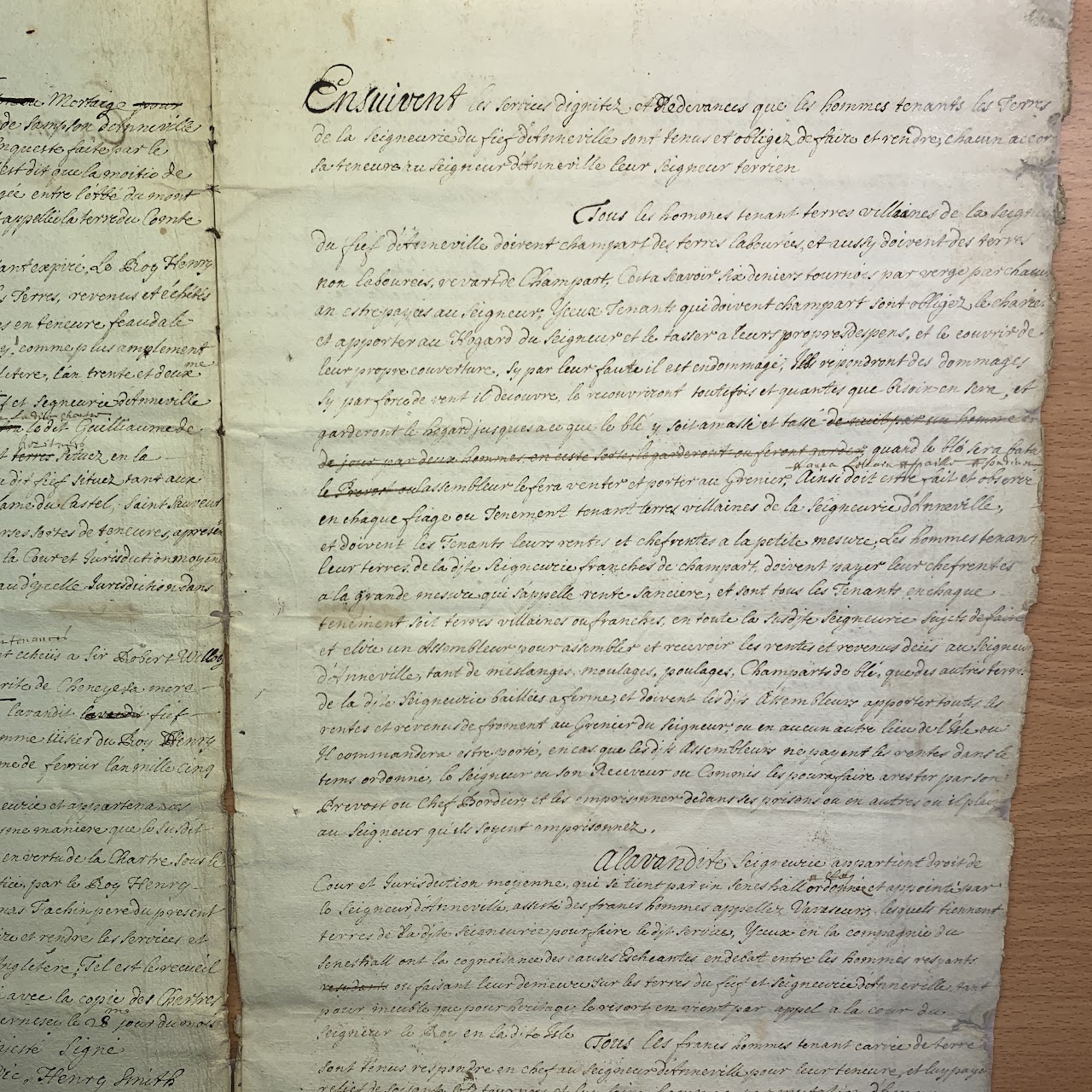 Examination of the tenure of the Fief d’Anneville, page 2: dues and rents owed by the tenants of the Court of Anneville.Image · lordofanneville.com · Feudal grants
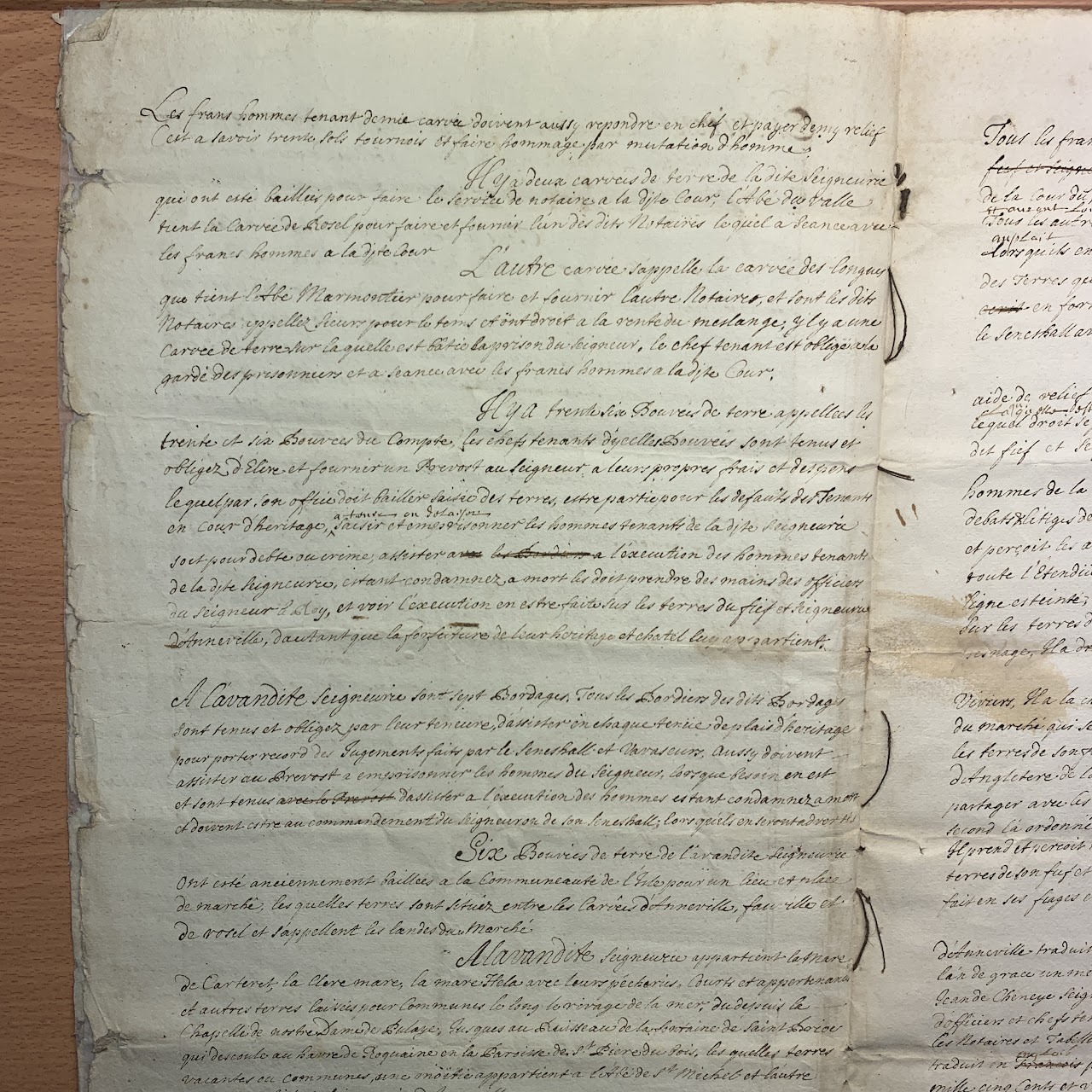 Examination of the tenure of the Fief d’Anneville, page 3: the rights of Court and middle justice held on the lands of the fief.Image · lordofanneville.com · Feudal grants“Examen de la Teneure de la Seigneurie du fief d’Anneville”, dated 1601 in the reign of Queen Elizabeth, naming Sir Thomas Leighton and George Paulet.Image · lordofanneville.com · Feudal grantsThomas Andros’ Commonplace Bookprivate-life1589 · Open documentHerbal remedies and fruit-growing; Andros family context, not an Anneville fief record
 16 February 1509/10, Indenture between Robert… (AQ 0096/01-01)archive16 February 1509 · Open document16 February 1509/10, Indenture between Robert…15 July 1597, Examination of Fief d’Anneville, made by… (AQ 0096/12-05)archive15 July 1597 · Open document15 July 1597, Examination of Fief d’Anneville, made by…30 June 1546, Copy of the Letters Patent given by King… (AQ 0110/06-01)archive30 June 1546 · Open document30 June 1546, Copy of the Letters Patent given by King…30 June 1546, Copy of the Letters Patent given by King… (AQ 0110/06-02)archive30 June 1546 · Open document30 June 1546, Copy of the Letters Patent given by King…31 October 1535, before Notary Public at… (AQ 0110/07)archive31 October 1535 · Open document31 October 1535, before Notary Public at…