Guernsey in this period
In the twentieth century Guernsey’s historic houses and institutions enter a new age of restoration, scholarship and international cultural attention.
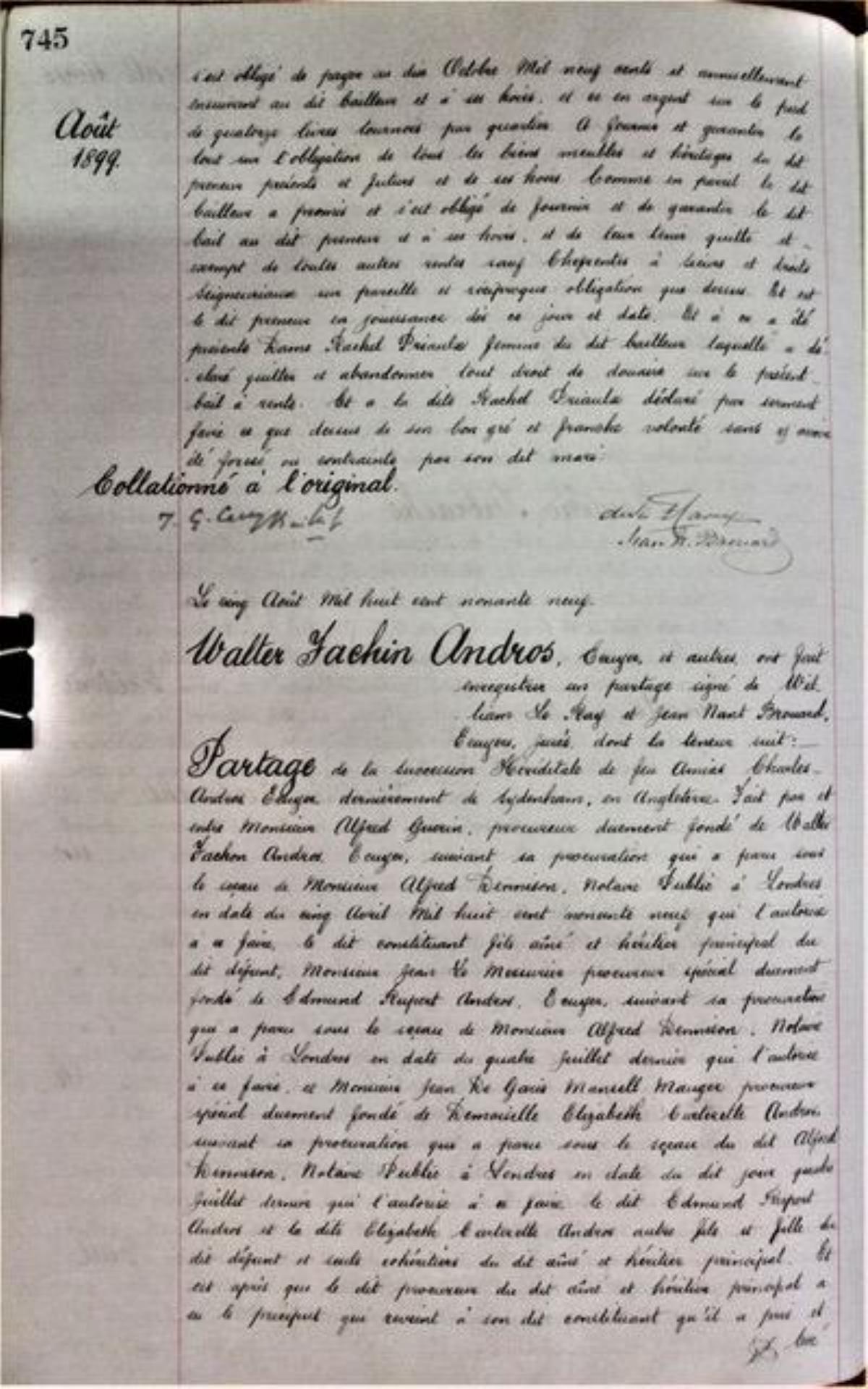
The twentieth century did not abolish the fiefs of Guernsey; it turned them into property that passes on paper. Guernsey's fiefs are Norman in origin, though the island has belonged to the English Crown for eight centuries. What changed in the twentieth century was the manner of transfer. A fief that had once passed by service and ceremony now passed by partage, the division of an inheritance among heirs, by will, and by deed, the signed document that records a transfer. The deeds are short. Read one after another, they show a Norman seigneurie crossing into the modern world with its title intact.
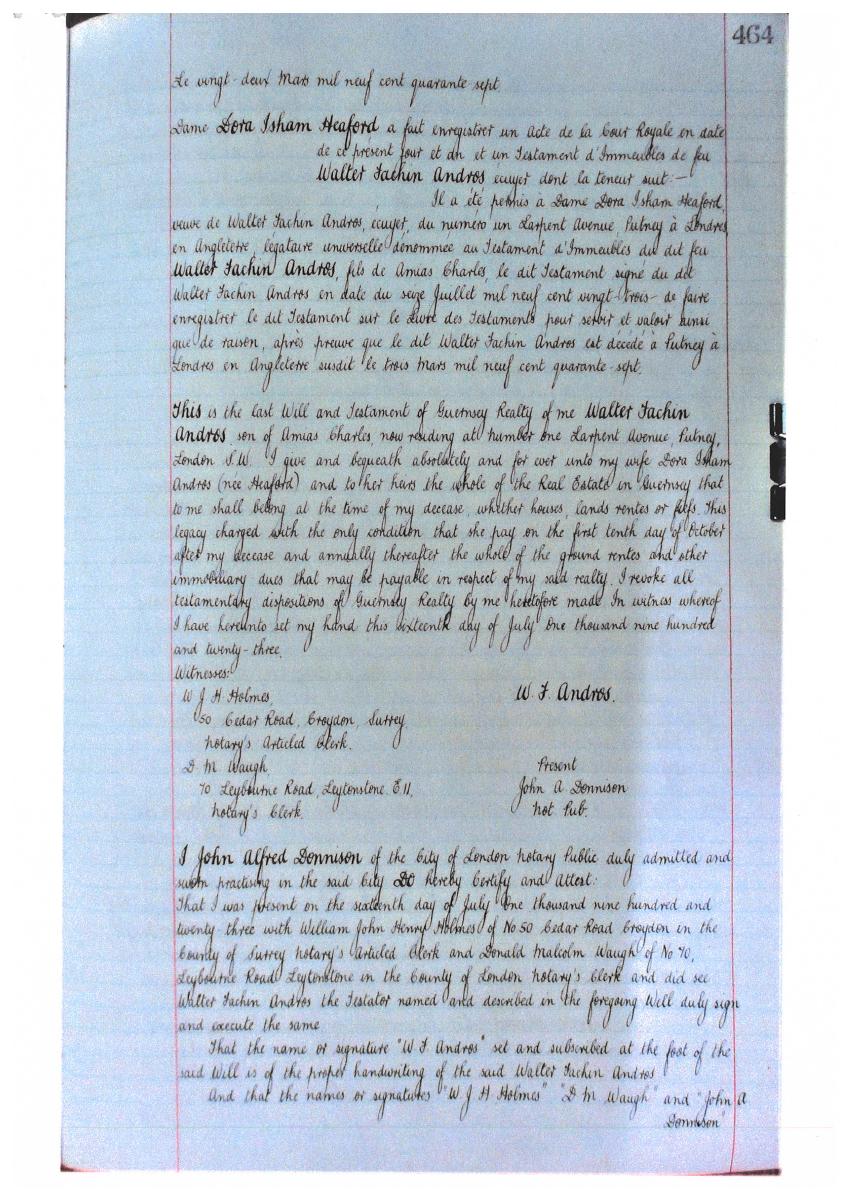
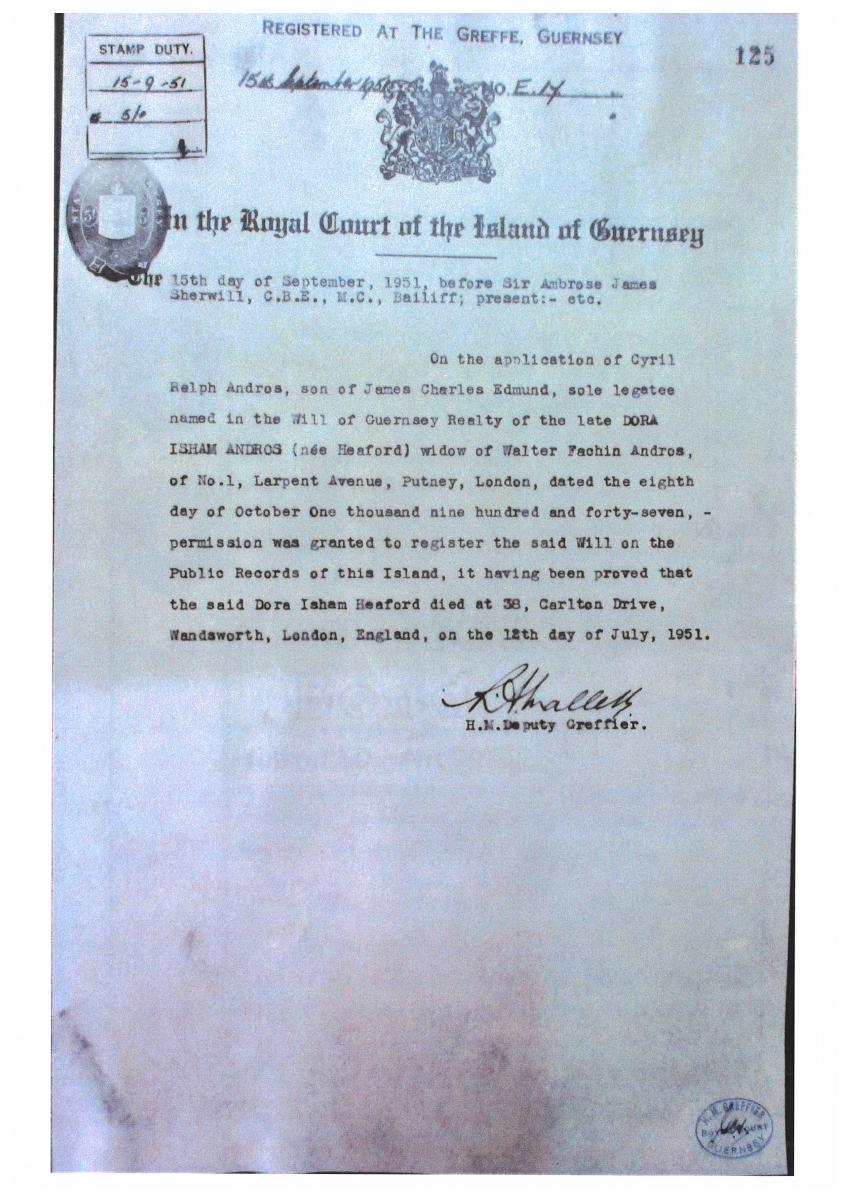
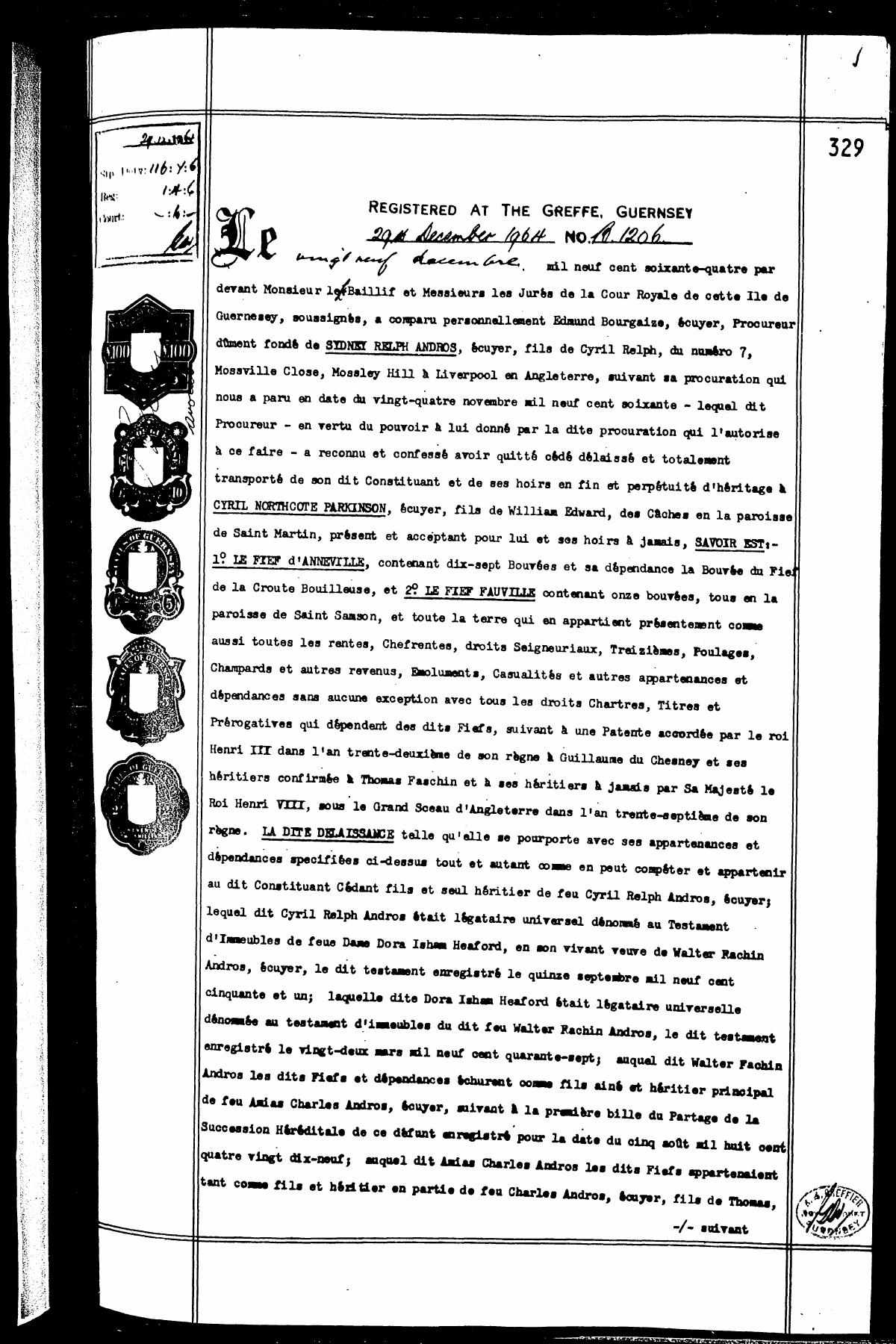
The Andros family, who had held the fief for more than three centuries, left Anneville in a single document. On 5 August 1899 Amias Charles Andros passed the fief to Walter Fachin Andros. Walter's will is dated 22 March 1947; Dora Isham Heaford's followed on 15 September 1951. Then, on 29 December 1964, a deed of délaissance — the legal act by which a fief is formally surrendered to a new holder — carried the Fief d'Anneville from Sydney Relph Andros to Cyril Northcote Parkinson, a British historian and author of this museum's narrative. The Manor House went another way: Parkinson bought it separately from Mélanie Gallienne Falla on 30 July 1968. House and title, joined for centuries, now travelled by different roads.
The fief moved on through the rest of the century by the same short documents. A délaissance registered on 10 September 1987 passed it to Donald Charles Cameron Wilson. On 2 September 1997 Wilson conveyed it to David Stuart Degge Lodder, and on 21 June 2022 Lodder conveyed it to Dr Marco Paret. Each deed is brief, because a document can be short when the thing it transfers is already settled.
On 16 July 2024 Dr Marco Paret, Seigneur d'Anneville, rendered homage to King Charles III, the present British monarch. Homage is the old ceremony in which the holder of a fief acknowledges his superior lord, and it has simply continued. Nine centuries of obligation carried across the modern world on a few sheets of paper: it is the most economical thing a fief has ever done, and very possibly the most remarkable.
Two chains run side by side from here: the title of the fief, which reaches the present Seigneur, and the ownership of the Manor House, which follows its own deeds. This museum shows both, because keeping them apart is what keeps the history exact.
About these lines: a narrative reconstruction written in the manner of C. Northcote Parkinson (1909–1993), Seigneur of the Fief d'Anneville from 1964 to 1987, historian, and author of the novels of Richard Delancey, a Guernsey sailor. Parkinson did not write them and they are not a historical source. They invent no characters and no speeches: every fact comes from the room above, and words in quotation marks are quoted from the documents cited there.
 Arms associated with Anneville: ermine, a fess gules
The twentieth century did not abolish the fiefs of Guernsey. It turned them into property that passes by partage, by will and by deed, and the deeds are short. Read one after another, they show a Norman seigneurie crossing into the modern world with its title intact.
On 5 August 1899 Amias Charles Andros passed the fief to Walter Fachin Andros. Walter's will is dated 22 March 1947; Dora Isham Heaford's followed on 15 September 1951. On 29 December 1964 a deed of délaissance carried the Fief d'Anneville from Sydney Relph Andros to Cyril Northcote Parkinson, and more than three centuries of Andros tenure closed on a single document. The Manor House went another way: Parkinson bought it separately from Mélanie Gallienne Falla on 30 July 1968.
The fief then passed to Donald Charles Cameron Wilson by délaissance registered on 10 September 1987; on 2 September 1997 Wilson conveyed it to David Stuart Degge Lodder; and on 21 June 2022 Lodder conveyed it to Dr Marco Paret. On 16 July 2024 Dr Marco Paret, Seigneur d'Anneville, rendered homage to King Charles III.
Two chains run side by side from here: the title of the fief, which reaches the present Seigneur, and the ownership of the Manor House, which follows its own deeds. This museum shows both, because keeping them apart is what keeps the history exact.
Partage of 5 August 1899; wills of 22 March 1947 and 15 September 1951; délaissance of 29 December 1964; conveyance of 30 July 1968; délaissance registered 10 September 1987; conveyances of 2 September 1997 and 21 June 2022; homage of 16 July 2024.Norman custom still decides how a Guernsey fief passes. The partage among heirs, the will, the deed passed before the Royal Court: these are the forms of the custom of Normandy as Guernsey has kept it. A twentieth-century deed of Anneville is short, but its rules are Norman.
In the twentieth century Guernsey’s historic houses and institutions enter a new age of restoration, scholarship and international cultural attention.
The transfer from the Andros line to Northcote Parkinson connects Anneville with an internationally known historian and novelist. His restoration and writing give Guernsey a cultural ambassador whose name remains associated worldwide with Parkinson’s Law.
This is the story of the last sale of the fiefs of Anneville, Croute Bouilleuse and Fauville, the fiefs whose history this room follows.
A fief is a piece of land together with the rights attached to it — payments made by tenants, a court, mills, hunting rights. It was held from a superior lord in exchange for loyalty and services, and in Guernsey it could be inherited, given, sold and bought like property, with its obligations passing with it.
On 29 December 1966 a deed was registered at the Greffe, the registry where deeds are recorded. In it, Sidney Ralph Andros sold the fiefs for £9,500 to Cyril Northcote Parkinson. The deed is the central source for the end of the Andros family's time as holders of the fiefs.
The deed's operative clauses — the clauses that actually carry out the sale — transfer the fiefs to Parkinson and require that the Livres de Perchage and other titles be handed over. A Livre de Perchage is a survey book listing every plot of land in a fief, its tenant and what he owed; the titles are the old documents proving the owner's rights.
The deed also recites a chain of earlier documents, dated 1899, 1947 and 1951, by which the property passed from hand to hand before reaching Andros. These passages are recitals: they tell the story of the earlier deeds but are not themselves an independent inspection of each earlier document.
One date does not agree. The file title and some secondary references say the sale was in 1964, while the registration and the power of attorney indicate 1966. The discrepancy is left visible rather than being quietly smoothed away.
The 1966 deed of sale looks back a whole century, to a deed of 1899 called a partage. The deed does two different things. Its operative clauses are the clauses that actually carry out the sale, transferring the fiefs from Sidney Ralph Andros to Cyril Northcote Parkinson. Its recitals are the passages that recount the earlier chain of documents, going back to 1899. A recital tells the story, but to know what the earlier deeds really said you must check the original acts themselves.
When Cyril Northcote Parkinson bought the fiefs in 1966, he did not acquire only the rights and the rents. The deed required Sidney Ralph Andros to hand over the Livres de Perchage — the survey books listing every plot of land in each fief, its tenant and what he owed — together with the titles and writings relating to the fiefs, that is, the old documents proving the owner's rights. So the story here is not only about who owned the fiefs, but also about the physical archive itself: the books and papers that travelled from owner to owner along with the land.
The 1966 deed describes the fiefs of Anneville and Fauville through bouvées, rents and rights. A rente is a yearly payment in money or in kind such as wheat, and the rights are the attached rights of the fief, such as dues paid by tenants or hunting rights. When a land measure like the bouvée appears in a deed of sale, it describes the measured land itself. The wider historical jurisdiction of the fief — the lord's powers and rights over it — is documented through those associated rights, not through the measure.
Two dates are recorded for the sale of the fiefs by Sidney Ralph Andros to Cyril Northcote Parkinson, and they do not agree. The file title and a secondary source preserve the date 1964. But the power of attorney and the registration of the deed at the Greffe establish that the operative sequence of the sale took place in 1966. The surviving acts, read in order, show which date is the operative one.
On 29 December 1966 a deed was registered at the Greffe under number 18206. By this deed Sidney Ralph Andros, who then held the fiefs of Anneville and Fauville, sold and handed them over to Cyril Northcote Parkinson for £9,500. A fief is a piece of land together with the rights attached to it, held from a superior lord in exchange for loyalty and services; in Guernsey it could be sold and bought like property, but its obligations passed with it.
The 1966 deed describes what was being sold. Anneville is described as seventeen bouvées with Croute Bouilleuse, and Fauville as eleven bouvées. The sale also included the rents (yearly payments owed on the land), the seigneurial rights, the title deeds and everything else belonging to the fiefs.
In the deed, the seller, Sidney Ralph Andros, promised to hand over to Parkinson the Livres de Perchage and all other titles and writings in his possession concerning Anneville, Fauville and their dependencies. A Livre de Perchage is a survey book listing every plot of land in a fief, its tenant and what he owed.
The 1966 deed also sets out how Sidney Ralph Andros came to own the fiefs. It records a chain of inheritance involving the 1899 partage among Amias Charles Andros, Walter Fachin Andros, Dora Isham Heaford, Cyril Relph Andros and Sidney Ralph Andros.
The documents give two different dates for the same sale. The title of the file and one secondary account say 1964, but the power of attorney and the Greffe registration both show that the completed transfer took place in 1966.
The Priaulx Library preserves an Andros manuscript group containing the 1594 Livre de Perchage, the Henry VIII patent material and the 1663 measuring of Anneville, Fauville and La Croute Balleuze. Newspapers and family writings add Amias Charles Andros as architect, memoirist and humorous author.
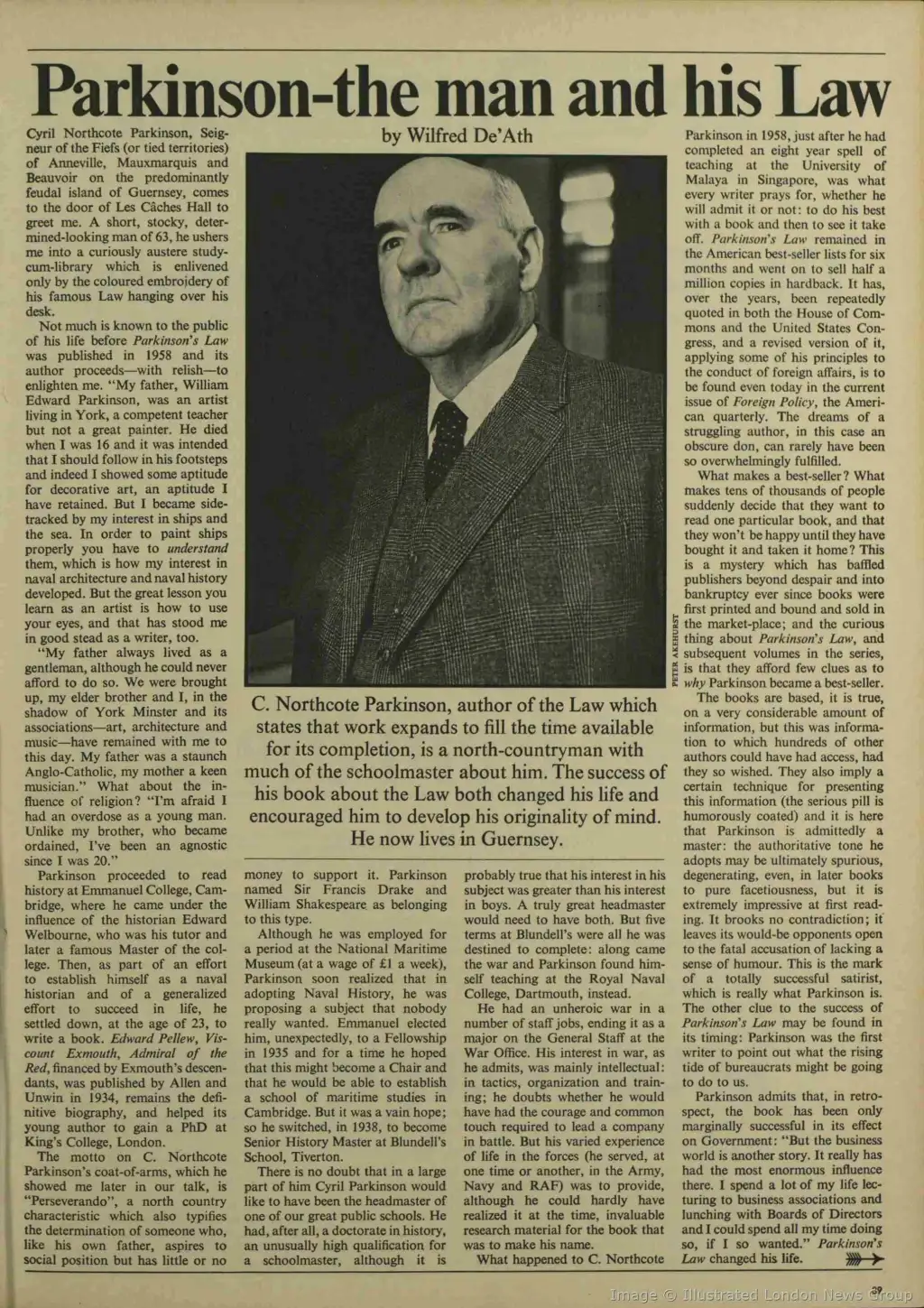 “Parkinson – the man and his Law”: press profile of C. Northcote Parkinson, author of Parkinson’s Law and later Seigneur of Anneville.Image · lordofanneville.com · 960 years of history
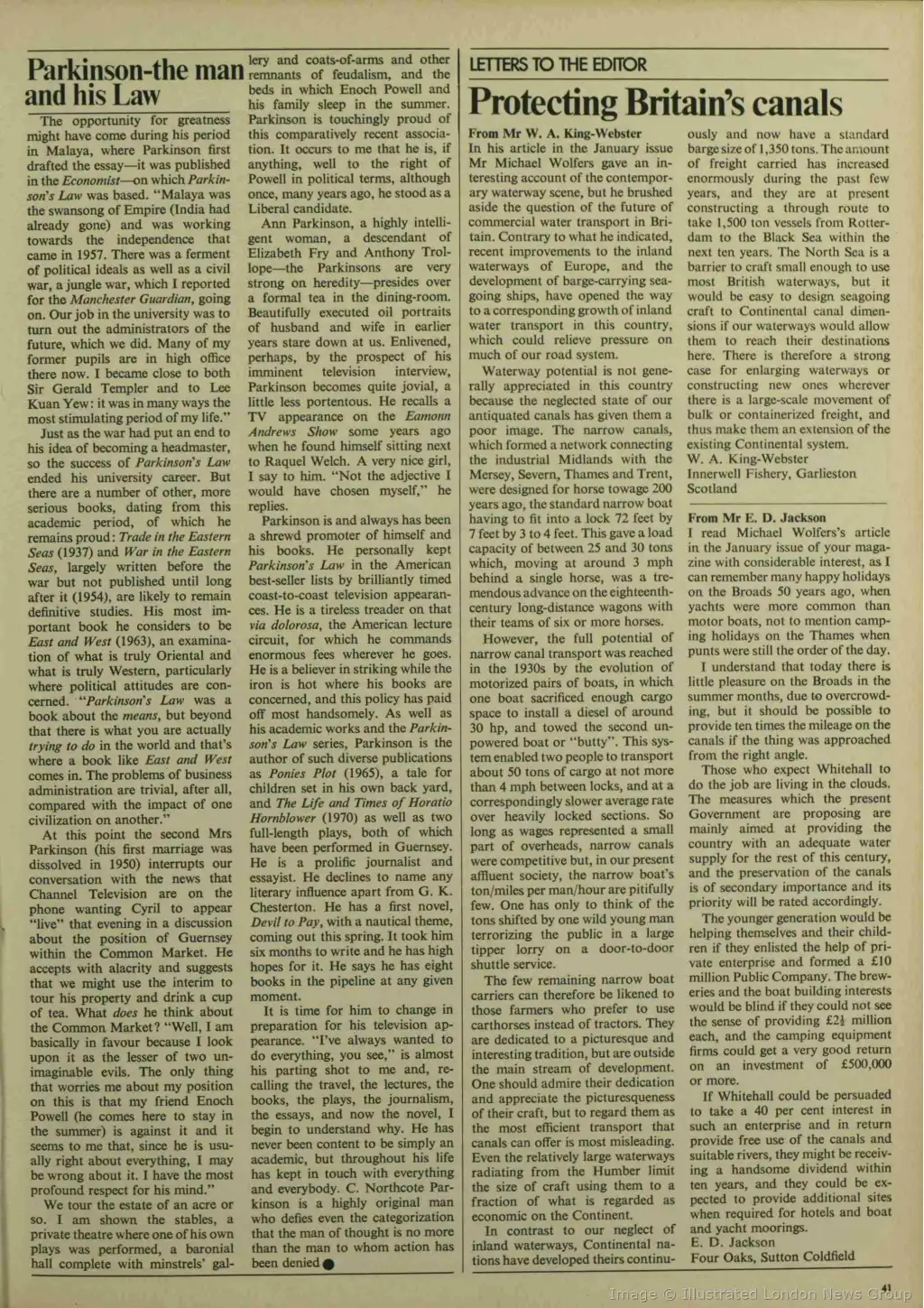 “Parkinson – the man and his Law”, second page, with letters to the editor.Image · lordofanneville.com · 960 years of history
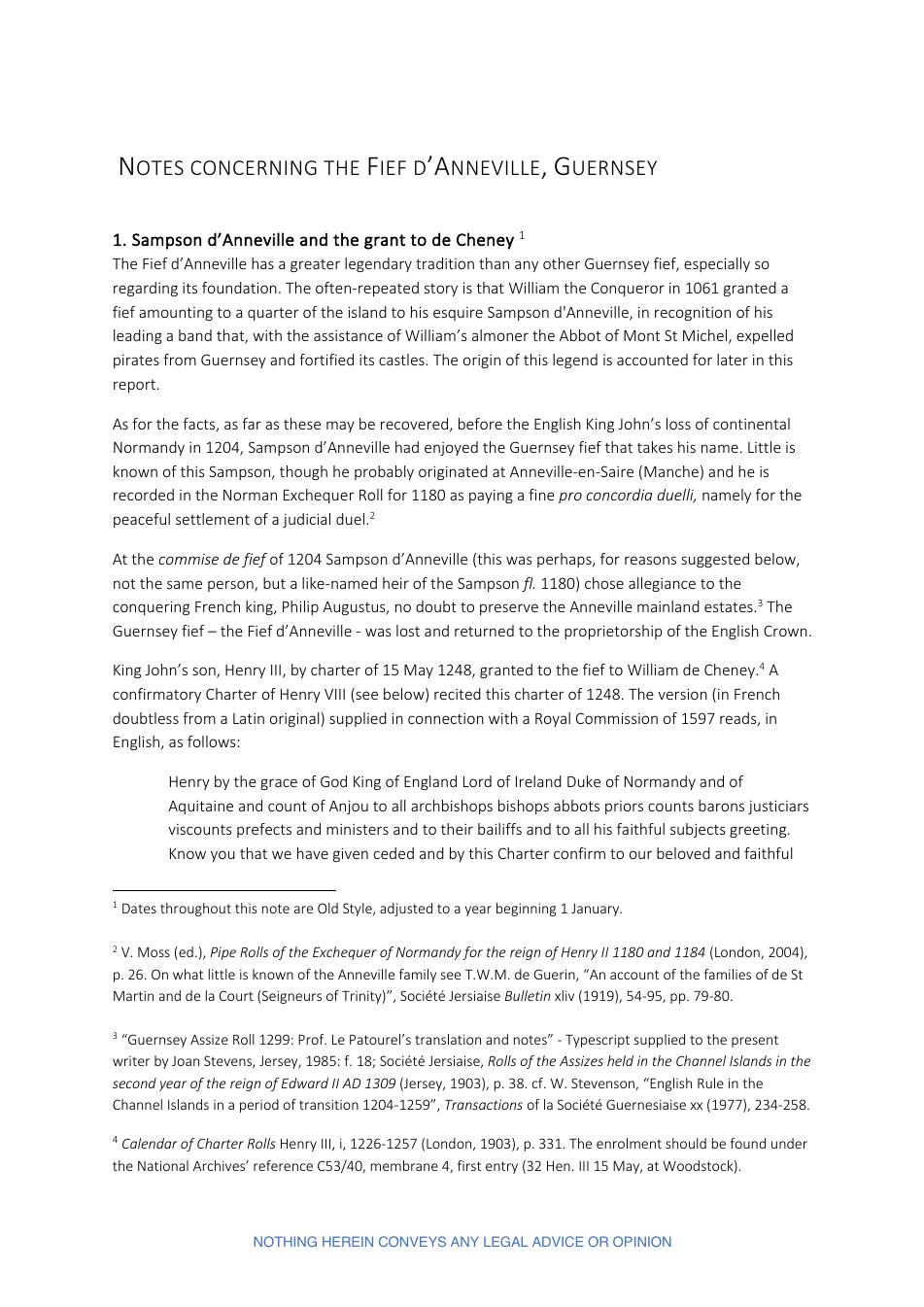 Ogier dossier on Annevilledocumentmodern research · Open documentPartage from Amias Charles Andros to Walter Fachin Androstitle-chain5 August 1899 · Open documentThree-page partage; primary evidence for the late Andros succession.Will of Walter Fachin Androstitle-chain22 March 1947 · Open documentPrimary testamentary document in the succession recited by the later conveyance.Will of Dora Isham Heafordtitle-chain15 September 1951 · Open documentPrimary testamentary document in the Andros succession.Conveyance from Sidney Ralph Andros to C. Northcote Parkinsonconveyanceregistered 29 December 1966; file tradition 1964 · Open documentOperative transfer of the fiefs and archive; the 1964/1966 date discrepancy remains visible.